Roofing Contractor in Lockhart, TX Built for Central Texas Heat, Hail & Storms
Lockhart roofs have a hard job. Summer attics climb past 140°F and bake shingles until they curl and shed granules. Spring supercells along SH 130 drop hail an inch across or bigger. Then a storm line can dump several inches of rain in a few hours and find every tired pipe boot and valley on the house. Lockhart Roofing Group repairs, replaces and installs roofs for homeowners, farms and small businesses across Caldwell County. On every job we check the underlayment, flashing and ventilation, so the fix holds up through the next storm season and doesn't just cover the problem.
Caldwell County properties vary a lot, and so do their roofs. We work on Victorian homes near the Courthouse Square, 1960s brick ranches, barndominiums and barns on acreage, and tract homes on their first re-roof. We pick materials to suit each building's age and how it's used. Our crews are regularly out in Dale, Uhland, Maxwell, Niederwald and Martindale. Wherever we work, you get a straightforward estimate, steady communication and a clean property when the job's done.
- ✓Serving Caldwell County since 2020
- ✓Bonded roofing contractor
- ✓Fully insured crews
- ✓Financing available
- ✓Serving properties within a 20-mile radius of Lockhart
- ✓Underlayment, flashing and ventilation checked on every job
- ✓Residential, farm, ranch and small-business roofing
Request Your Free Estimate
No obligation. Fast, honest quotes.
Thank you — your request was sent!
A member of the Lockhart Roofing Group team will reach out shortly. Need help now? Call (512) 812-8340.
Why Lockhart Roofs Wear Out Faster Than You'd Expect
Lockhart sits where the Blackland Prairie meets the Post Oak Savannah, just east of I-35. That spot brings scorching summers, violent spring storms, expansive clay soil and a building stock that runs from the 1890s to last year. Each of those things affects how long a roof lasts and how it fails.
Heat, Hail and Flash-Flood Rain
From June through September, highs usually sit in the mid-to-upper 90s, and hot years bring weeks at or above 100°F. Attic temperatures can go well past 140°F. That heat dries out underlayment, breaks down shingle sealant strips and speeds up granule loss. Strong UV exposure lasts nearly all year. Lockhart averages about 34–37 inches of rain, but it doesn't arrive gently. It comes in bursts during April–June storm lines and late-summer tropical moisture, and this is Flash Flood Alley, where a single storm can drop several inches in hours. Supercells crossing the I-35 and SH 130 corridors regularly bring hail an inch or larger and straight-line winds over 60 mph. Winter Storm Uri in February 2021 showed that hard freezes, ice damming at the eaves and burst attic pipes can happen here too.
A Building Stock That Spans 130 Years
The 1894 Caldwell County Courthouse anchors a square of brick and stone commercial buildings. Most have low-slope built-up or modified-bitumen roofs hidden behind parapets, with aging scuppers. The surrounding blocks have Victorian and Folk Victorian homes and Craftsman bungalows with steep, complex roof lines, plank decking and sometimes three layers of old shingles. Older Lockhart and Luling have many 1940s–1970s ranch homes with low-pitch roofs and undersized ventilation. Out in Dale, Maxwell and Niederwald, you'll see exposed-fastener metal on farmhouses, barns and barndominiums. Along I-35 in Kyle, Buda and San Marcos, thousands of 2000s-era tract homes with builder-grade shingles and OSB decking are now 10–20 years old. That's their first full replacement cycle.
Texas Rules, Permits, HOAs and Historic Review
Texas doesn't license residential roofers, so a contractor's bonding, insurance and local track record matter more here than in many states. Texas Insurance Code Chapter 707 makes it illegal for a contractor to waive or absorb your deductible. State law also bars roofers from acting as your public adjuster. Inside Lockhart, Kyle, Buda and San Marcos city limits, re-roofs and decking work may need permits and inspections. Unincorporated county areas usually require little or no permitting. Lockhart's Courthouse Square historic district may require a Certificate of Appropriateness before you change roofing material, color or profile, and San Marcos has its own historic design review. HOAs in Plum Creek, Sunfield, Blanco Vista and Kissing Tree generally want shingle colors and metal roofs approved before work starts.
A Price-Conscious, Fast-Growing Market
Caldwell County's roughly 45,000 residents include many long-established, multigenerational households, and incomes run lower than in neighboring Hays and Travis counties. Many families depend on insurance claims, financing and honest advice on whether to repair or replace. At the same time, Austin commuters are moving in along SH 130 and US 183, and Kyle has grown to around 45,000 people. After every big hail event, out-of-state storm chasers move in. Owners here need a roofer who'll still be around when warranty questions come up.
Common Roofing Problems We See Around Lockhart
Most roof failures in Caldwell and eastern Hays County come from a few local causes: heat, hail, sudden heavy rain, shifting clay soil and aging building stock. Here's what usually goes wrong, why it happens here, and how to spot it before a small issue turns into a ceiling stain.
Hail and Wind Storm Damage Serious
Hail impacts that bruise or fracture asphalt shingles, knock off protective granules, dent metal panels and crack skylights, vents and gutters. Straight-line winds lift shingle tabs, break sealant bonds and tear off ridge caps. All of this opens the roof to water.
Why it's common hereSpring supercells crossing the I-35 and SH 130 corridors regularly produce hail an inch or larger, sometimes golf-ball size, along with 60+ mph winds. Shingles that have spent years in Lockhart's heat get brittle and fracture more easily on impact. A lot of the damage isn't visible from the ground. Meanwhile, insurers are denying more claims, paying actual cash value only or applying separate wind/hail deductibles. Accurate documentation matters more than ever, and storm chasers make it harder for homeowners to know who to trust.
Signs you'll notice- Dark, circular bruises or spots where granules are missing
- Granules piling up in gutters or at downspout outlets after a storm
- Dents in metal vents, gutters, AC fins or metal roof panels
- Creased, lifted or missing shingle tabs
- Ridge caps torn loose or missing
- Cracked skylight domes or plastic vent covers
Damage tends to concentrate in the newer subdivisions along SH 130 and in Kyle's Plum Creek and Buda's Sunfield, where builder-grade shingles meet direct hail paths. Rural metal roofs in Dale and Mustang Ridge show dents and loosened fasteners after severe April–June storms.
Our fix: We document the damage with photos and measurements and give you an honest damage assessment. Then we repair or replace with properly sealed shingles or metal. Class 4 impact-resistant options may qualify you for an insurance discount.
Heat-Aged, Curling and Blistering Shingles Moderate
Asphalt shingles wear out early from long exposure to extreme heat and UV. The signs are curled edges, blisters, cracked tabs, failed sealant strips and heavy granule loss. Shingles in this condition are easy for wind to lift and leave the mat exposed to more sun damage.
Why it's common hereLockhart summers bring weeks of mid-to-upper-90s highs and many 100°F days in hot years. When attic ventilation is poor, the roof deck sits above a space hotter than 140°F, which bakes the shingles from both sides. Sealant strips weaken, underlayment dries out, and a roof rated for 25 years may start looking tired at 12 to 15. Many homeowners can't tell this heat wear from hail damage, and that distinction matters a great deal for insurance claims.
Signs you'll notice- Shingle edges cupping upward or corners clawing
- Bubbles or blisters on the shingle surface
- Bare, shiny patches where granules have worn away
- Hot upstairs rooms and rising summer cooling bills
- Brittle shingles that crack when lifted
- Dark algae streaks on north-facing slopes
This is common on 1960s–70s ranch homes in older Lockhart and Luling, where attic ventilation is often undersized. It's also showing up across 2000s tract homes in Kyle, San Marcos and Mustang Ridge that have 3-tab or entry-level shingles and only box vents.
Our fix: If the field of the roof is still sound, we do targeted shingle repair and correct the ventilation. When the shingles are spent, we replace them with architectural or impact-resistant shingles and a balanced intake-and-exhaust system.
Failed Flashing, Pipe Boots and Valleys Moderate
Leaks at the points where the roof meets something else: chimneys, walls, vent pipes, skylights and valleys. Rubber pipe boots crack, metal flashing pulls loose, and sealant shrinks. Water then runs under the shingles and into the decking.
Why it's common hereHeat and UV crack rubber boots and dry out sealant within a few years. Lockhart's long dry spells hide these weak points until a storm line drops two or three inches in an hour. That's when water finds every gap at once. Builder-installed flashing on many production homes was installed with minimal sealant and no counter-flashing, so these spots tend to fail first.
Signs you'll notice- Ceiling stains near bathrooms, vent stacks or chimneys
- Cracked or split rubber collars around plumbing vents
- Rusty or lifted step flashing along walls
- Drips that show up only during heavy, wind-driven rain
- Damp or dark decking around penetrations, seen from the attic
- Debris buildup or worn shingles in roof valleys
We see this across every era of housing. It's especially common on complex Victorian roof lines near downtown Lockhart, Craftsman bungalows with brick chimneys, and newer tract homes in Blanco Vista and Sunfield where pipe boots reach the end of their life at 8–12 years.
Our fix: We replace the pipe boots, re-flash chimneys and walls with step and counter-flashing, and rebuild valleys with proper underlayment. That stops the leak at its source instead of covering it with caulk.
Foundation-Movement Leaks at Walls and Chimneys Serious
Recurring leaks caused by the house itself shifting. When the foundation moves, framing racks, roof-to-wall flashing pulls open, and chimneys or parapets crack. These leaks are often misdiagnosed as shingle problems and come back after every repair.
Why it's common hereLockhart sits on expansive Blackland clay, Houston Black–type soils that shrink hard in drought and swell when wet. Each cycle moves foundations, especially pier-and-beam homes. That movement opens gaps at roof-to-wall joints and chimney flashing and cracks mortar and parapet caps. Patch the shingles and the leak comes back, because the real cause is the flashing detail that can't flex with the building.
Signs you'll notice- A leak that returns in the same spot after repairs
- Gaps between flashing and brick or siding
- Cracked chimney mortar or a leaning chimney
- Interior drywall cracks near the leak area
- Doors and windows that stick seasonally
- Stains on upper walls rather than ceilings
This shows up most on pier-and-beam Victorian and Craftsman homes around downtown Lockhart and Luling, mid-century brick ranches on clay lots, and parapet walls on Courthouse Square commercial buildings. It's usually worst after a wet spring that follows a summer drought.
Our fix: We trace the leak path, rebuild chimney and wall flashing with counter-flashing that tolerates movement, and reseal parapets. If we see signs of foundation trouble, we'll tell you so you can follow up on it.
Loose Fasteners and Rust on Exposed-Fastener Metal Roofs Minor
R-panel and corrugated metal roofs depend on thousands of screws with rubber washers. Over time, heat cycling backs screws out and the washers dry and crack. Water then wicks into the screw holes, and rust spreads along laps and panel edges.
Why it's common hereMetal roofs in Lockhart heat to extreme temperatures every summer afternoon and cool off at night, so the panels expand and contract daily. That movement slowly works screws loose, and UV destroys neoprene washers. Hail can dent panels and crack washers, and high winds pull on loosened panels. Many barns and outbuildings across rural Caldwell County haven't been re-screwed in decades.
Signs you'll notice- Screws backed out or visibly tilted
- Rust stains streaking from fasteners or panel laps
- Drips inside the barn or shop during rain
- Panels rattling or lifting in wind
- Cracked or missing rubber washers
- Daylight visible through screw holes from inside
This is very common on barns, shops, barndominiums and metal-roofed farmhouses in Dale, Maxwell, Uhland, Niederwald, Martindale and Creedmoor. Manufactured homes with metal roof-overs and older 5V crimp roofs near Lockhart State Park show it too.
Our fix: We re-screw with oversized gasketed fasteners, seal the laps and ridge, treat surface rust and apply a coating where it makes sense. If panels are too far gone, we replace them.
Aging Low-Slope Roofs and Parapet Leaks Serious
Flat and low-slope roofs covered with built-up, modified bitumen, TPO or EPDM membranes develop seam splits, blisters, ponding water and failed parapet flashing. Leaks often travel far from where the water gets in.
Why it's common hereDowntown Lockhart's 1800s and early-1900s commercial buildings have low-slope roofs behind brick parapets. Their scuppers, coping and flashing have been patched for generations. Intense UV breaks down membranes, heavy rains overload clogged drains and scuppers, and clay-driven movement cracks parapet walls. For businesses on the square, a leak can mean closed dining rooms on busy tourist weekends.
Signs you'll notice- Water standing on the roof 48 hours after rain
- Blisters, alligatoring or cracks in the membrane
- Open seams or lifted edges
- Cracked parapet caps or loose coping
- Rust or clogs at scuppers and drains
- Stained ceiling tiles inside the business
This is concentrated around the Courthouse Square Historic District, Luling's downtown and Oil Patch-area commercial strips, and small retail and shop buildings along US 183. Ag-business offices and porches on rural homes often have low-slope sections as well.
Our fix: Depending on the condition of the existing roof, we make seam and flashing repairs, apply a restoration coating or replace the roof with TPO or EPDM. We schedule the work to keep disruption to your business low.
Active Leaks and Open Roofs After a Storm Emergency
Missing sections of shingles, punctures from fallen limbs, or wind-stripped panels that let water pour into the home. This needs immediate tarping or temporary repair to stop interior damage, mold and ceiling collapse.
Why it's common hereFlash Flood Alley storms can drop several inches of rain in hours, so a roof opening that would mean a few drips somewhere else can soak insulation and drywall here in a single evening. After big hail or wind events, repair backlogs across Central Texas grow fast. Homeowners who wait for a permanent replacement without temporary protection risk compounding the damage.
Signs you'll notice- Water dripping or running through ceilings or light fixtures
- Sagging, bubbling drywall
- Visible holes, missing shingles or exposed decking
- Tree limbs on the roof
- Wet attic insulation
- Ice buildup at eaves during rare hard freezes
Wooded lots near Lockhart State Park and Cedar Creek see limb damage. Wind-stripped roofs show up across open subdivisions along SH 130. During Uri-style freezes, older Lockhart homes had ice damming and burst attic pipes.
Our fix: We tarp or temporarily seal the opening right away, photograph everything for your records, then schedule the permanent repair or replacement once conditions allow.
Roofing Services for Lockhart Homes, Farms and Businesses
We handle everything from patching a single pipe boot to fully re-roofing a barn or a building on the Courthouse Square. Every recommendation starts with what the building actually needs: its age, its use, local permits, and how much more Central Texas weather it has to take.
Roof Repair, Leak Detection & Roof Patching
We find the actual source of a leak and fix it properly. That includes roof shingle repair, roof patching, skylight leak repair, roof damage repair and general roof repair on shingle, metal and low-slope roofs.
Our approachWe trace water from the stain back to where it enters, from the attic and from the roof. We replace damaged shingles, boots and sealant with matched materials and check the surrounding underlayment and decking before closing anything up.
In Lockhart, TXMany Lockhart leaks only appear during heavy, wind-driven rain, and some come from clay-driven movement at walls and chimneys. We look past the obvious stain so a 1920s bungalow or a 2008 tract home doesn't keep leaking after the first storm line.
Best for: Homeowners with a stain, drip or a few missing shingles who want an honest repair instead of a sales pitch for a new roof.
Roof Replacement, Roof Installation & Winter Roof Replacement
We do full tear-off and re-roofing on homes and outbuildings, plus new roof installation on additions, shops and new construction. When weather allows, we can schedule replacements in the cooler months.
Our approachWe tear down to the deck, replace rotted planks or OSB, and install synthetic underlayment, ice-and-water shield at valleys and penetrations, new drip edge, flashing and balanced ventilation. Then we install your chosen roofing.
In Lockhart, TXHistoric Lockhart and Luling homes often hide multiple shingle layers and rotted plank decking, so we budget for that up front. In Kyle, Buda and San Marcos, we help you get HOA color approval and handle city permits where they apply.
Best for: Roofs past repair because of age, heat damage or hail, and tract homes reaching their first replacement at 15–20 years.
Asphalt Shingle Installation: Architectural & 3-Tab
We install and repair asphalt shingles, including 3-tab shingles, architectural shingles and Class 4 impact-resistant shingles that may qualify for Texas insurance premium discounts.
Our approachWe follow manufacturer nailing patterns and starter-strip requirements, use the correct number of nails per shingle for wind exposure, and pair the shingles with a ventilation system sized for your attic so the heat doesn't void performance.
In Lockhart, TXBuilder-grade 3-tab shingles across SH 130 subdivisions rarely survive Lockhart's hail. Many owners upgrade to architectural or UL 2218 Class 4 shingles when they replace, which can mean better hail resistance and possible savings on premiums.
Best for: Most suburban and in-town homes, budget-conscious replacements, and HOA neighborhoods that require shingles in approved colors.
Metal Roofing: Standing Seam, Steel, Corrugated & Residential Metal ⭐ Specialty
We install and repair metal roofs on homes, barns, barndominiums and shops, including standing seam, R-panel and corrugated steel. We also handle metal roof repair and specialty flashing for metal and steel roofs.
Our approachStanding seam uses concealed clips that let panels expand and contract with the heat. For exposed-fastener systems, we use gasketed screws set to the correct torque. We install proper metal trim, closures and roof flashing designed for metal roofs.
In Lockhart, TXRural Caldwell County runs on metal roofs. We re-screw tired barns in Dale and Niederwald, put standing seam on farmhouses near Maxwell, and match 5V crimp or standing seam profiles on historic Lockhart homes where review requires it.
Best for: Farms, ranches, barndominiums and homeowners who want a long-life, heat-reflective roof that stands up to wind.
Emergency Roof Repair, Tarping & Storm Damage Repair ⭐ Specialty
Emergency roof repair, emergency roof tarping, roof tarp installation and hail and wind damage repair to stop water fast and protect your home until permanent work is done.
Our approachWe secure heavy-duty tarps with battens over the damaged area, seal punctures and photograph all the damage. Then we give you clear documentation and a repair-versus-replace assessment you can use with your insurer.
In Lockhart, TXAfter spring supercells cross SH 130, repair backlogs build quickly and storm chasers show up. We're local, we don't waive deductibles (Texas law prohibits it), and we'll still be here when you have warranty questions.
Best for: Homes and businesses with active leaks, missing roofing or storm damage that needs to be documented before more rain comes.
Commercial Roofing & Flat Roofs: TPO, EPDM, Repair & Replacement
Commercial roof repair and replacement, flat roof repair, flat roof replacement, TPO roofing and EPDM rubber roofing for small businesses, shops, churches and low-slope residential sections.
Our approachWe core-cut to check existing layers, fix drainage and scuppers, heat-weld TPO seams or fully adhere EPDM, and rebuild parapet flashing and coping so walls stop feeding water into the roof.
In Lockhart, TXCourthouse Square buildings have aging parapets and scuppers, and their owners can't afford to close during busy weekends. We plan staging, noise and timing around your business and work through historic review requirements where they apply.
Best for: Downtown Lockhart and Luling storefronts, restaurants, ag offices, warehouses and homes with flat porch roofs.
Specialty Roofing: Slate, Tile, Cedar Shake & Copper
We install and repair slate, clay and concrete tile, cedar shake and copper roofing and accents for homes where character, longevity or historic accuracy matter.
Our approachWe confirm the structure can carry heavier materials, use copper or stainless fasteners and flashing, and install with the right underlayment and ventilation for Central Texas heat and humidity.
In Lockhart, TXSome historic homes near downtown Lockhart and in San Marcos's historic districts call for period-appropriate materials or copper detailing. We'll help you prepare what's needed for design review or a Certificate of Appropriateness.
Best for: Historic homes, custom builds and owners who want a premium, distinctive roof built to last for generations.
Flashing & Chimney Work: Chimney Flashing, Drip Edge & Chimney Leak Repair
Chimney flashing repair, chimney leak repair, roof flashing replacement and drip edge installation, the details that cause most Lockhart leaks.
Our approachWe install step flashing woven into the shingles, counter-flashing cut into mortar joints, crickets behind wide chimneys and continuous drip edge at the eaves and rakes, and we seal everything with materials rated for high heat.
In Lockhart, TXExpansive clay movement keeps opening roof-to-wall joints on pier-and-beam homes in Lockhart and Luling. Our flashing details are built to tolerate that movement instead of cracking within a season.
Best for: Recurring chimney or wall leaks, older brick chimneys, and any roof where flashing was caulked instead of installed.
Roof Inspection, Maintenance, Restoration, Coatings & Waterproofing
Roof inspections, routine roof maintenance, roof restoration, roof coating application and roof waterproofing to extend the life of roofs that still have years left.
Our approachInspections cover the shingles or panels, flashing, underlayment condition, decking and attic ventilation, with photos. On metal and low-slope roofs, we apply elastomeric or silicone coatings over properly cleaned and repaired surfaces.
In Lockhart, TXAnnual checks after spring storm season catch hail bruising and cracked boots early. Reflective coatings on barns, shops and flat commercial roofs also cut heat gain during Lockhart's 100°F summers.
Best for: Buyers and sellers, owners after a hailstorm, landlords, and anyone trying to put off a full replacement responsibly.
Ventilation, Soffit & Fascia, and Gutter Guards
Roof ventilation installation, soffit and fascia installation and repair, and gutter guard installation that keep attics cooler and water moving off the roof.
Our approachWe calculate intake and exhaust needs, add ridge or off-ridge vents and vented soffit, replace rotted fascia boards, and install gutter guards that keep oak leaves and granules out of downspouts.
In Lockhart, TXMany 1960s ranch homes and box-vented tract homes trap attic heat well above 140°F. That shortens shingle life and raises cooling bills. Balanced ventilation is one of the most cost-effective roof upgrades in Lockhart.
Best for: Hot upstairs rooms, high summer electric bills, rotted eaves, and homes under post oak or pecan trees.
Winter Storm Services: Ice Dams, Ice & Snow Removal, Heat Cable
For rare Uri-type freezes: roof ice removal, roof snow removal, gutter ice removal, professional ice dam removal, ice dam leak repair, water damage repair from ice dams, winter leak repair and roof heat cable or tape installation.
Our approachWe clear ice safely with non-damaging methods, open drainage paths at the eaves, repair leaks once conditions allow, and install heat cable on problem eaves and valleys for homes that want protection against future freezes.
In Lockhart, TXThe February 2021 storm brought days below freezing, ice damming and burst attic pipes to Lockhart homes that weren't built for it. We help repair that damage and make roofs more resilient for the next hard freeze.
Best for: Homes that had ice-dam leaks during a past freeze, older homes with poorly insulated attics, and owners who want freeze preparation.
How a Roofing Project Works With Us
Whether it's a single leak or a full re-roof, you'll know what's happening at every step. That includes what we found, what it costs, when the crew arrives and what we'll leave behind.
Inspection & Documentation
- We look at the roof surface, flashing, valleys and penetrations up close
- We check the attic for ventilation, decking condition and signs of moisture
- We photograph damage and note whether it looks like hail, wind, heat wear or movement
- We walk you through what we found in plain language
Local note: After a major hailstorm, demand spikes across Caldwell and Hays counties. We prioritize active leaks and tarping first.
Straightforward Estimate & Options
- Written estimate with itemized materials and labor
- Repair-versus-replace advice that reflects the roof's actual condition
- Material options such as architectural, Class 4, metal or TPO with honest pros and cons
- Financing options explained if you'd like them
Local note: For insurance-funded work, contracts include the disclosures and cancellation rights Texas law requires. We don't waive or absorb deductibles, and we don't negotiate your claim.
Permits, HOA & Historic Approvals
- Confirm permit requirements with the city building department
- Help prepare HOA architectural submissions for color and material
- Help with historic review materials for properties near the Courthouse Square
- Order materials and lock in your install date
Local note: Lockhart, Kyle, Buda and San Marcos may require permits. Unincorporated areas like Dale or Creedmoor usually don't. Plum Creek, Sunfield, Blanco Vista and Kissing Tree HOAs typically require approval first.
Installation Day(s)
- Protect landscaping, AC units and driveways before tear-off
- Tear off to the deck and replace any rotted decking
- Install underlayment, flashing, drip edge, ventilation and roofing
- Daily updates so you're never guessing about progress
Local note: In summer, we start early to beat the afternoon heat and keep an eye on storm lines. We won't leave a roof open when rain is coming.
Cleanup & Final Walkthrough
- Magnetic sweep of yard, driveway and pasture for nails
- Haul away all debris and old roofing
- Walk the finished roof with you, with photos
- Provide warranty paperwork and care recommendations
Local note: On farms and ranches, we pay extra attention to nails in pastures and driveways where livestock, tires and equipment travel.
Why Lockhart Property Owners Choose Lockhart Roofing Group
We Live With the Same Weather You Do
We've worked in Caldwell County since 2020. We know what a June heat wave does to a box-vented attic, what an April supercell does along SH 130, and how Blackland clay keeps pulling flashing away from chimneys. That local knowledge changes our recommendations. We'll suggest the ventilation upgrade that actually lowers your attic temperature, flashing details that can handle foundation movement, and impact-resistant materials where hail risk justifies the cost. You won't get a one-size-fits-all package designed somewhere else.
Bonded and Insured, Because Texas Doesn't License Roofers
Texas has no state license for residential roofing, so anyone with a truck and a ladder can call themselves a roofer. We're bonded and insured. That protects you if something goes wrong on your property and gives you real recourse if a job isn't completed as agreed. Before you hire anyone, ask to see proof of insurance and bonding. We'll gladly show you ours, and we think every Lockhart homeowner should ask every contractor for the same.
Honest Storm Damage Advice, No Chaser Tactics
After every big hailstorm, out-of-state crews knock on doors promising free roofs. We do it differently. We'll tell you honestly whether you're looking at hail damage or normal heat wear, document what we find with photos, and follow Texas law. That means no deductible waivers and no acting as your adjuster. If your roof doesn't need replacing, we'll say so. And when warranty questions come up two years later, we're still here in Lockhart to answer the phone.
Metal Roofing Expertise for Farms and Rural Properties
Rural Caldwell and eastern Hays County runs on metal roofs, and a lot of city contractors don't want the drive out to them. We install and repair standing seam, R-panel and corrugated steel on homes, barns, barndominiums and shops from Dale and Maxwell to Niederwald and Martindale. We re-screw old panels, seal laps, fix rusted trim and install new metal with proper closures and flashing made for metal roofs. You get the same care on a hay barn that we put into a house.
Materials Matched to Your Building's Age and Use
A Victorian near the Courthouse Square, a 1965 brick ranch and a 2010 Kyle tract home all need different roofing. We tailor materials to each building. That might mean historic-appropriate metal profiles that can pass review, architectural or Class 4 shingles in HOA-approved colors, or TPO on a downtown storefront. On older homes, we plan for multiple shingle layers and plank decking repairs up front, so the estimate holds up once the tear-off starts.
Straightforward Estimates and Financing Available
Many Caldwell County families are budget-conscious, and roofs are a big expense. Our estimates are itemized and written in plain language, so you can see what you're paying for and compare offers fairly. When a repair will buy you several more good years, we'll tell you that before we pitch a replacement. When replacement is the right call, financing is available to spread the cost out, so you don't have to put off a roof that's already letting water in.
Steady Communication and a Clean Property
You shouldn't have to chase your roofer for updates. We confirm schedules, tell you when the crew is arriving and keep you posted on any changes, including weather delays. We cover landscaping and AC units before tear-off, haul away every scrap of old roofing and run magnetic sweeps for nails across yards, driveways and pastures. When we leave, the only sign we were there should be a roof that keeps you dry.
A Lockhart Roofer You Can Check Out
Our business runs on word-of-mouth in Lockhart and the surrounding towns. Homeowners, farmers and shop owners recommend us to their neighbors because we explain things plainly, show up when we say we will and leave the property clean.
Bonded • Insured • Financing Available
Roofing Service Areas Around Lockhart
We serve homes, farms and businesses within about 20 miles of Lockhart. That covers Caldwell County, eastern Hays County and the fast-growing SH 130 and I-35 corridors. Our crews are regularly in each of these communities, so you're never waiting on a contractor from across the metro.
Lockhart & Caldwell County
SH 130 & Rural Hays/Travis Edge
I-35 Corridor Communities
Not sure if we cover your area? Call (512) 812-8340.
What Roofing Costs in Lockhart, TX
Roofing prices around Lockhart depend on the size of the roof, what's underneath it and what you're putting on top. The ranges below reflect typical Central Texas projects. Your written estimate will spell out exactly what's included for your building.
Roof Size, Pitch & Complexity Primary Factor
Roofs are priced by the square, which is 100 square feet. A simple gable ranch in older Lockhart costs far less per square than a steep Victorian near downtown with turrets, dormers and multiple valleys. Steeper pitches need more safety equipment and slow the crew down. More hips, valleys and penetrations mean more flashing, more cutting and more labor, all of which shows up in the final number.
Material Choice Primary Factor
Material is the biggest choice you control. Three-tab shingles cost the least but hold up poorly against Lockhart hail. Architectural shingles are the most common middle ground. Class 4 impact-resistant shingles cost more up front but may earn a Texas insurance premium discount. Standing seam metal costs considerably more than shingles and lasts much longer. Exposed-fastener R-panel is the economical metal choice for barns and shops.
Tear-Off Layers & Decking Condition Secondary Factor
Many older Lockhart and Luling homes have two or three layers of shingles over plank decking, which adds disposal and labor costs. Rotted planks or delaminated OSB have to be replaced before new roofing goes on, and you often can't see it until tear-off. We include a per-sheet decking price in every estimate, so surprises stay predictable instead of turning into blank-check change orders.
Ventilation, Flashing & Upgrades Secondary Factor
Doing the job right includes new pipe boots, step and counter-flashing, drip edge, ice-and-water shield in valleys and balanced ventilation. Adding ridge vents, soffit intake, gutter guards or new fascia raises the cost a bit. These items also protect your shingle warranty and help bring down attic temperatures that can climb past 140°F in a Central Texas summer.
Permits, HOA & Historic Requirements Situational Factor
City permits in Lockhart, Kyle, Buda or San Marcos add modest fees and inspection time. Properties in Lockhart's historic district may need specific materials or profiles to receive a Certificate of Appropriateness, which can affect cost. HOA-approved colors sometimes limit which product lines you can choose. Unincorporated county properties usually skip permitting altogether.
| Typical project | Details | Estimated range |
|---|---|---|
| Leak repair or pipe boot and flashing fix | Single-story home in Lockhart; replace boots, reflash one wall or chimney, swap damaged shingles | $350 – $1,500 |
| Architectural shingle replacement | About 2,000 sq ft tract home in Kyle or Mustang Ridge; single-layer tear-off, synthetic underlayment, new ventilation | $10,000 – $17,000 |
| Standing seam metal roof on a farmhouse | About 2,200 sq ft home near Dale or Maxwell; tear-off, underlayment, 24-gauge standing seam, custom trim | $24,000 – $42,000 |
| Barn or shop re-screw and coating, or small TPO commercial roof | Re-screw and seal a 2,400 sq ft R-panel barn, or a TPO replacement on a small downtown storefront | $3,000 – $25,000+ |
Financing is available for repairs and replacements, so you can protect your home now and pay over time. Ask about options when we prepare your estimate. A properly ventilated, well-flashed roof protects everything under it. In Lockhart, an impact-resistant or metal upgrade can also lower insurance premiums, cut cooling costs and add resale value, especially in competitive Kyle and Buda neighborhoods.
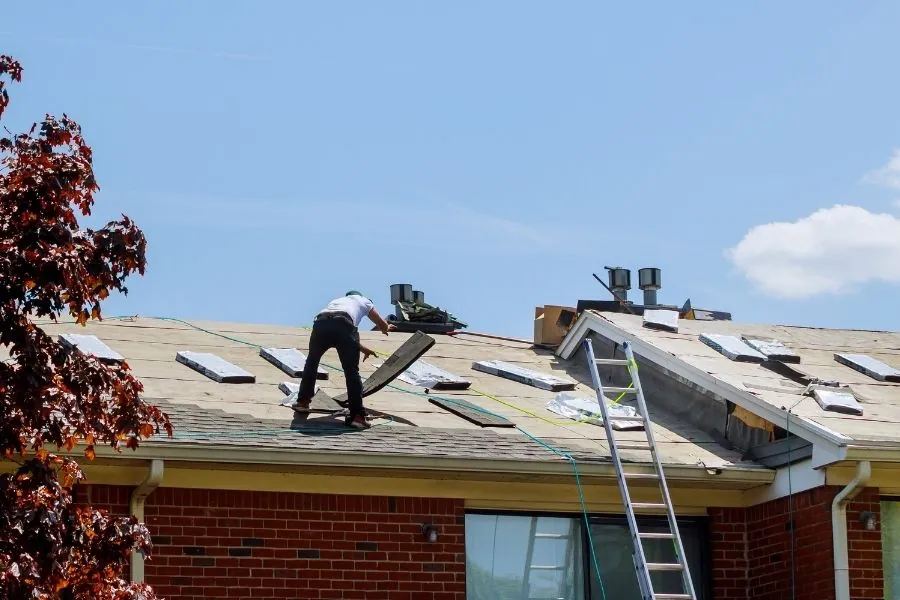
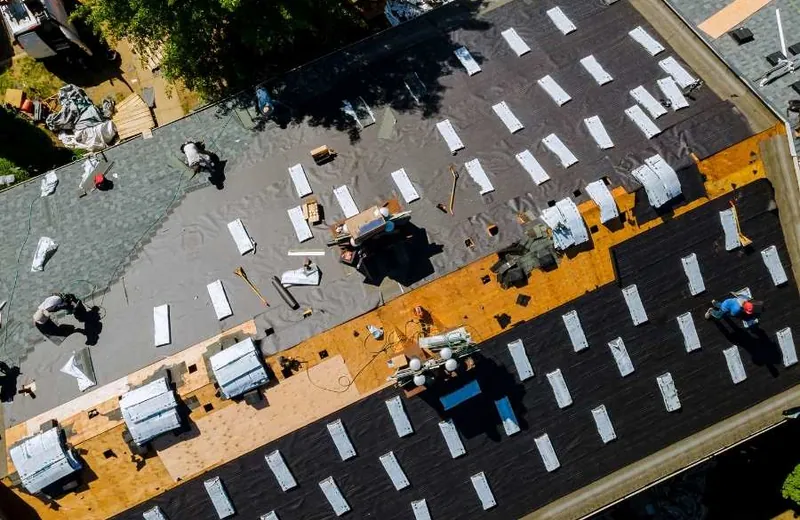
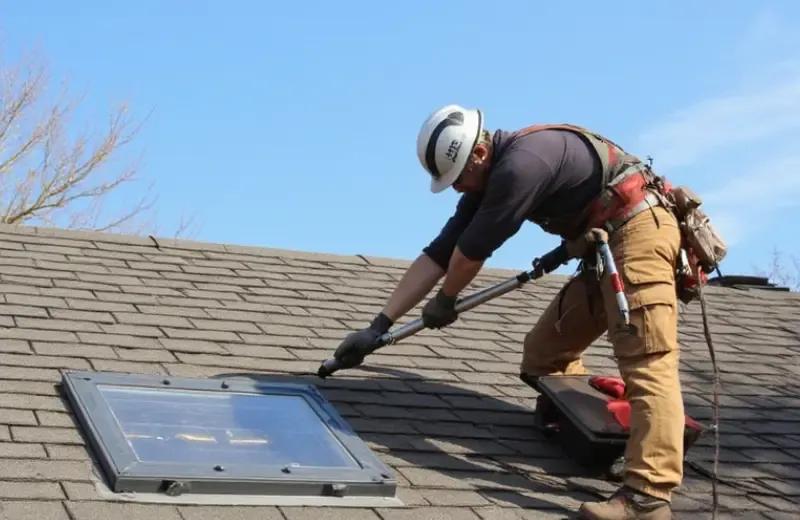
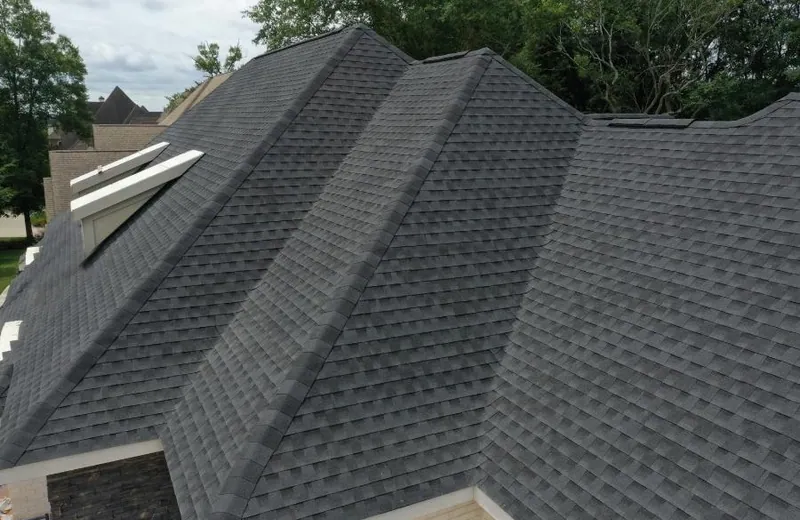
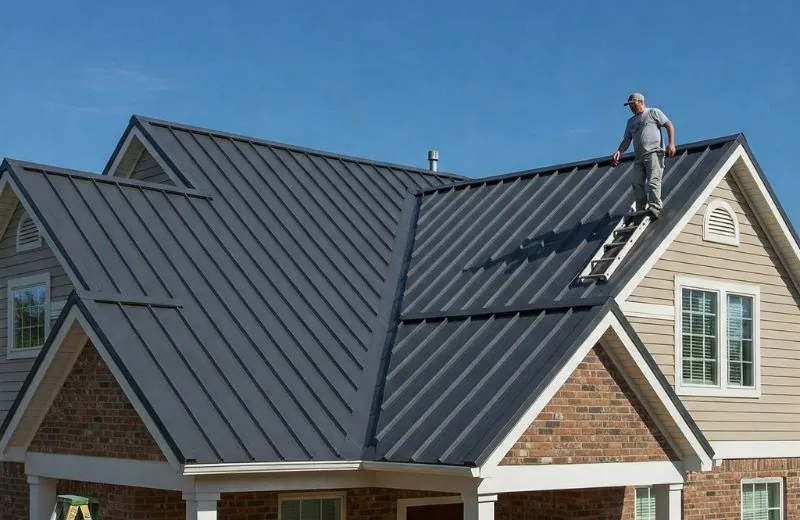
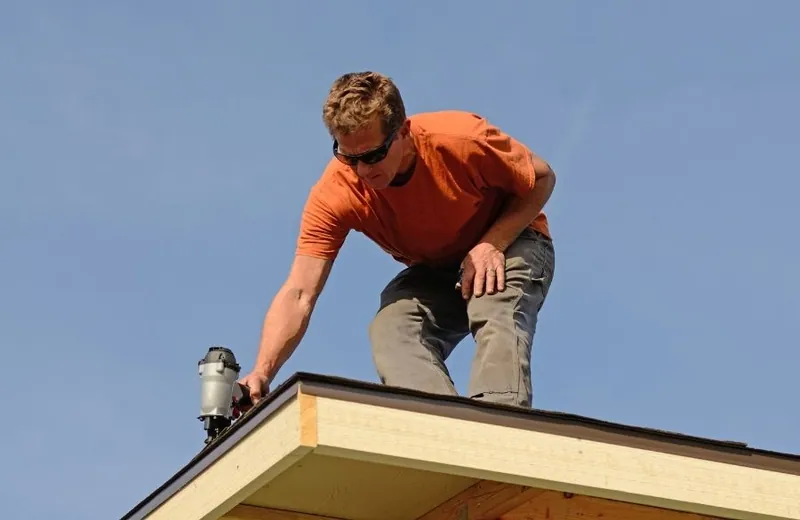
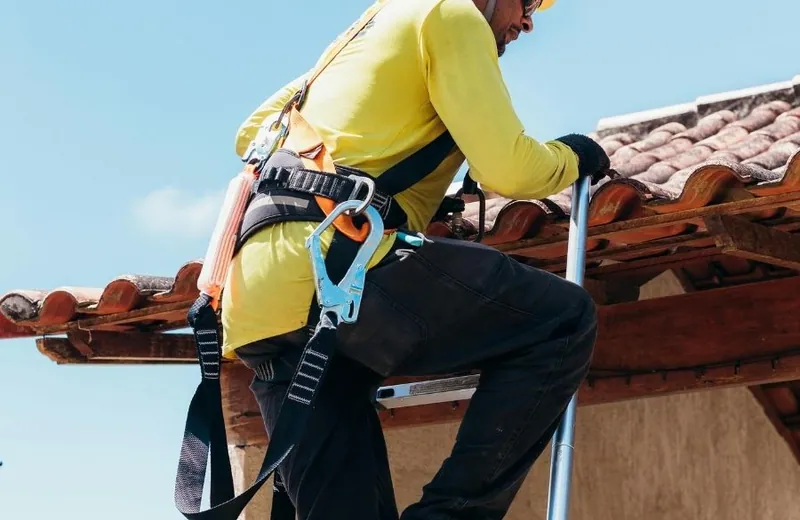
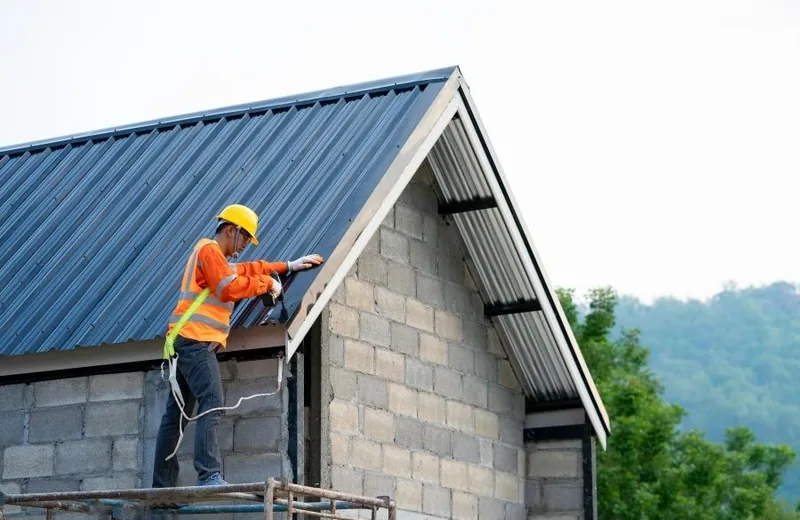
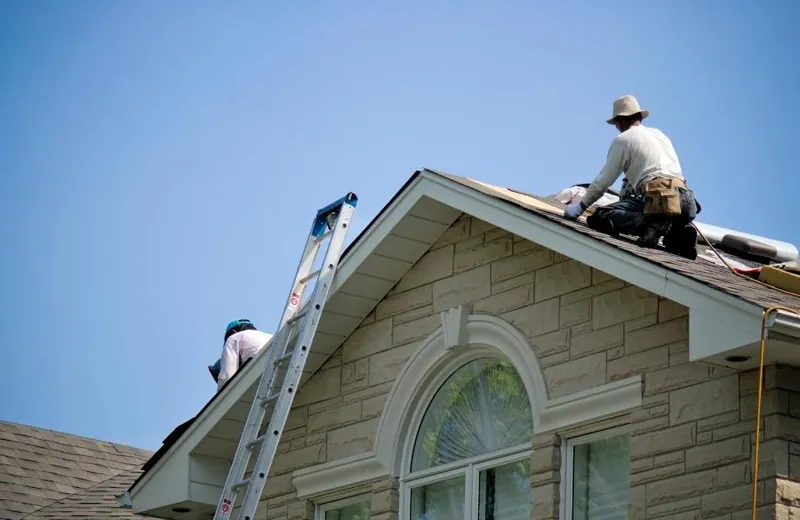
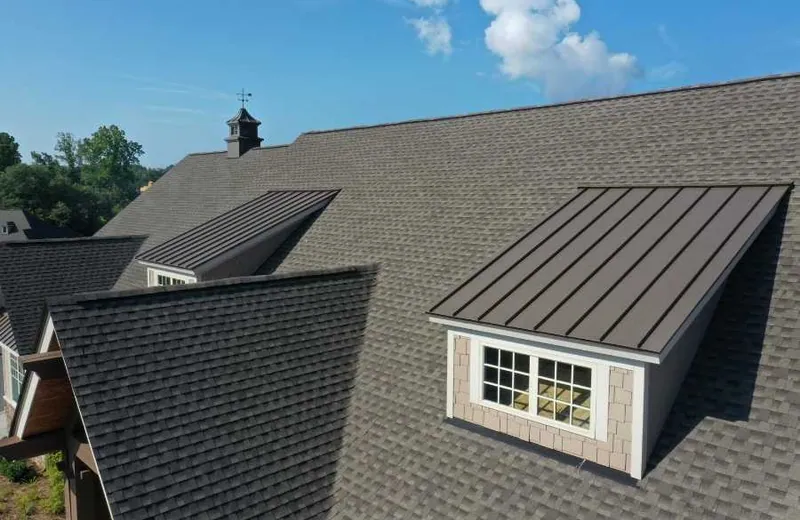
Recent roofing Projects in Lockhart, TX

Roofing Questions Lockhart Homeowners Ask Us
How much does a new roof cost in Lockhart, TX?
Most asphalt shingle replacements on a typical 1,800–2,200 square foot Lockhart home run about $9,500 to $17,000. The final price depends on pitch, complexity, the number of layers being torn off and decking condition. Class 4 impact-resistant shingles usually add 10–25%. Standing seam metal often costs $24,000 to $42,000 or more for a similar home. Repairs like pipe boot or flashing fixes commonly fall between $350 and $1,500. We provide a written, itemized estimate after inspecting your roof and attic, and financing is available if you'd like to spread out the cost.
How long does a roof replacement take?
Most single-family shingle replacements in Lockhart, Kyle or San Marcos take one to three days once work starts. Steep Victorian roofs, homes with multiple layers or significant decking rot, and full metal roof installs can take longer. Barns and commercial roofs vary with size and access. Before work begins, permits, HOA approval or historic review can add anywhere from a few days to a few weeks. Weather also matters. We watch the forecast closely during spring storm season and won't leave your roof open when heavy rain is on the way.
Do I need a permit or HOA approval to re-roof?
It depends on where you live. Inside Lockhart, Kyle, Buda and San Marcos city limits, re-roofs and any decking or structural work may require a building permit and inspection, so we confirm requirements with each city before starting. Unincorporated areas like Dale, Creedmoor or Niederwald generally require little or no residential permitting. If your home is in Lockhart's historic district, changing roofing material, color or profile may require a Certificate of Appropriateness. HOAs in Plum Creek, Sunfield, Blanco Vista and Kissing Tree typically need to approve shingle color and metal roofs before work begins.
How do I know if my roof has hail damage or just normal wear?
Hail damage usually looks like random dark bruises or spots where granules have been knocked off, sometimes with a soft spot underneath. You'll often see dents in vents, gutters and AC fins at the same time. Heat wear tends to be more uniform: curled edges, blisters, cracked tabs and general granule thinning across sun-exposed slopes. Telling them apart matters for insurance claims, and it's hard to judge from the ground. We'll inspect up close, photograph what we find and tell you honestly which one you're looking at, even if that means there's no claim.
Will you cover my insurance deductible?
No. Texas Insurance Code Chapter 707 makes it illegal for a contractor to waive, absorb or rebate a homeowner's insurance deductible, and any roofer offering to do so is putting you at legal risk. Texas law also bars roofers from acting as public adjusters or negotiating your claim. What we can do is inspect thoroughly, document the damage with photos and measurements, and provide a clear repair or replacement estimate for you to share with your insurer. Contracts for insurance-funded work include the disclosures and cancellation rights required by state law.
When should I call a roofer instead of waiting?
Call right away if water is coming through a ceiling or light fixture, if you see missing shingles or exposed decking, or if a limb has hit the roof. Those situations need emergency tarping before the next storm. Schedule an inspection soon after any hail event, even if nothing is leaking yet, because many claims have filing deadlines. You should also book one if you notice granules in gutters, curling shingles, recurring stains or rising cooling bills. Small flashing and boot repairs are inexpensive. Waiting until a storm line pushes water into insulation and drywall usually isn't.
How can I make my roof last longer in Central Texas heat?
Start with ventilation. A balanced intake-and-exhaust system keeps attic temperatures down and keeps shingles from baking from below. Have the roof inspected after spring storm season so cracked pipe boots, lifted tabs and loose flashing get fixed before they leak. Keep gutters clear of oak and pecan debris. Trim limbs back from the roof, and treat algae streaks on north slopes. On metal roofs, re-screw and reseal fasteners every several years. On flat roofs, keep drains and scuppers clear. When it's time to replace, Class 4 shingles or metal handle Lockhart's hail and UV far better than builder-grade 3-tab.
Is metal or shingle better for my Lockhart property?
Both work well here. The right choice depends on your building and budget. Architectural or Class 4 asphalt shingles cost less up front, fit almost every HOA and suit most suburban homes in Kyle, Buda and Lockhart's newer subdivisions. Metal costs more initially but lasts much longer, reflects heat, resists wind and is the natural fit for farmhouses, barndominiums, barns and many historic homes. For barns and shops, exposed-fastener R-panel is economical. For homes, standing seam's concealed fasteners mean less maintenance. We'll walk you through the real trade-offs for your property.
Serving Lockhart, TX & Nearby
Get Your Lockhart Roof Inspected Before the Next Storm Line
Whether it's a new ceiling stain, hail from last week's supercell or a barn roof that's rattling loose, we'll tell you what's going on and what it'll cost to fix it right.
- ✓A thorough roof and attic inspection with photos of what we find
- ✓Honest repair-versus-replace advice, not a sales pitch
- ✓A straightforward, itemized written estimate
- ✓Bonded and insured crews on your property
- ✓Underlayment, flashing and ventilation checked on every job
- ✓Financing available for repairs and replacements
- ✓Steady updates and a clean property when we're done
⚡ Water coming in right now? Call us for emergency roof tarping to protect your home until permanent repairs can be made.
Bonded • Insured